Nvidia, the leading semiconductor company, has announced a significant boost to the US stock market. The company’s latest advancements in graphics processing units (GPUs) and artificial intelligence technologies have been credited with driving investor confidence and contributing to the overall growth of the American financial landscape.
Nvidia Leads Wall Street Higher
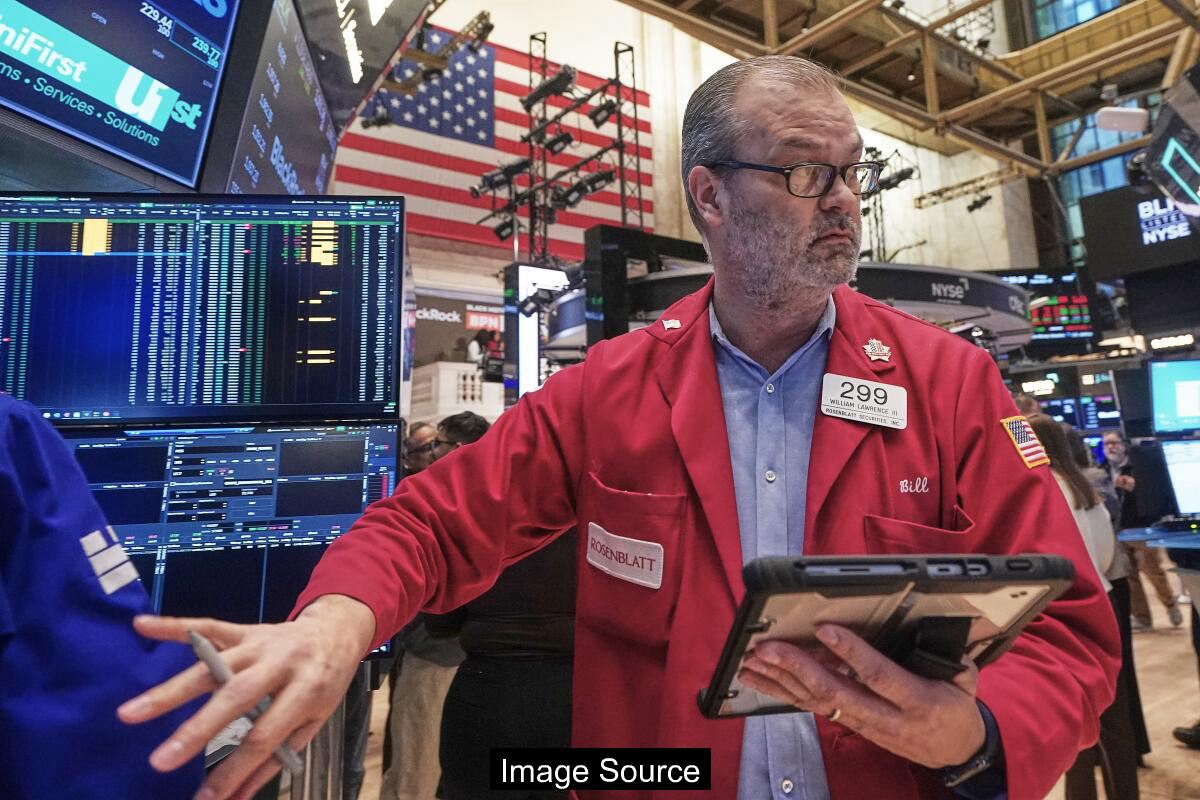
The stock market ticked higher on Wednesday, led by its most influential stock, Nvidia. The S&P 500 rose 0.6% and pulled a bit closer to its all-time high set late last month. The Dow Jones Industrial Average added 129 points, or 0.3%, and the Nasdaq composite gained 0.8%.
Nvidia helped lift the market and climbed 1.6% after Meta Platforms announced a long-term partnership where it will use millions of chips and other equipment from Nvidia for its artificial-intelligence data centers. “No one deploys AI at Meta’s scale,” Nvidia CEO Jensen Huang said. Because his company is the most valuable on Wall Street, Nvidia’s stock was the single most powerful force pulling the S&P 500 higher.
That performance demonstrated the upside of AI development for the U.S. stock market. But investors have also focused on the potential downsides recently, which has led to sharp swings for Wall Street. Worries are rising, for example, about how much companies like Meta are spending on AI and whether they can make back their huge investments through higher profits and productivity in the future.
Concerns About AI’s Impact
Meta’s stock fell as much as 1.7% before recovering and rising 0.6%. Another worry is that if AI succeeds in creating tools to do complicated tasks more cheaply, companies in industries as far flung as software and legal services and trucking logistics could see their businesses get undercut. That has pushed investors to suddenly and aggressively punish stocks of companies seen as under threat, and analysts have likened it to a “shoot first-ask questions later” mentality.
Several profit reports from companies helped to lift stocks Wednesday. They continued what’s been a strong reporting season for the big U.S. companies in the S&P 500. Cadence Design Systems climbed 7.6% after delivering both profit and revenue for the latest quarter that topped analysts’ expectations. CEO Anirudh Devgan credited what he called “the essential nature of Cadence’s engineering software,” even as investors worry about AI threatening to remake the industry.
Analog Devices rose 2.6% after likewise topping analysts’ estimates for profit and revenue. The chip company said it saw record orders during the quarter for its data center business. Outside of earnings reports, Moderna jumped 6.1% after saying regulators at the Food and Drug Administration will review its flu vaccine candidate after earlier refusing to consider it.
Economic Data and the Fed
All told, the S&P 500 rose 38.09 points to 6,881.31. The Dow Jones Industrial Average added 129.47 to 49,662.66, and the Nasdaq composite climbed 175.25 to 22,753.63.
In the bond market, Treasury yields ticked higher following reports on the U.S. economy that came in better than economists expected. The yield on the 10-year Treasury rose to 4.08% from 4.05% late Tuesday. One report said that industrial production improved last month by more than economists expected. Another said orders for computers, fabricated metal products and other long-lasting manufactured goods rose more in December than economists expected, when not including airplanes and other transportation equipment.
A third report said homebuilders broke ground on more new homes in December than expected. Such strong data could encourage the Federal Reserve to keep interest rates steady. The Fed has put its cuts to interest rates on hold, but many on Wall Street expect it to resume later this year. The widespread forecast is that will come during the summer, after a new chair is scheduled to step in atop the Fed.
Global Market Reactions
Minutes released Wednesday from the Fed’s last meeting, though, showed many officials want to see inflation fall further before they would support additional interest rate cuts this year. Lower rates can give a boost to the economy and prices for investments, but that comes at the cost of potentially worsening inflation.
In stock markets abroad, London’s FTSE 100 climbed 1.2% after the latest update on U.K. inflation bolstered expectations that the Bank of England may soon cut interest rates. Japan’s Nikkei 225 rose 1% as Prime Minister Sanae Takaichi was reappointed by the parliament following a landslide victory for her ruling Liberal Democrats in a Feb. 8 election. The expectation is that she will push through policies to help the economy and markets.
Elsewhere in Asia, several markets were closed for the Lunar New Year holiday.
Mini-FAQ
Q: How did Nvidia’s partnership with Meta impact the stock market?
A: Nvidia’s stock rose 1.6% after Meta Platforms announced a long-term partnership to use millions of Nvidia’s chips and equipment for its artificial intelligence data centers. As Nvidia is the most valuable company on Wall Street, its performance was a significant factor in pulling the S&P 500 higher on the day.
Q: What concerns are investors having about AI’s impact on industries?
A: Investors are worried that if AI succeeds in creating tools to do complicated tasks more cheaply, companies in industries like software, legal services, and trucking logistics could see their businesses get undercut. This has led to a “shoot first-ask questions later” mentality where investors are quickly punishing stocks of companies seen as under threat from AI disruption.
Investor Takeaways
The stock market’s performance on Wednesday demonstrated both the potential upsides and downsides of AI development for investors. On one hand, Nvidia’s partnership with Meta highlighted the demand for AI technology and its ability to boost the fortunes of key players in the space.
However, the broader concerns about AI’s disruptive impact on various industries have also led to volatility and uncertainty in the market. Investors will need to carefully monitor how companies navigate the AI landscape and whether they can effectively capitalize on the technology while mitigating the risks.
Overall, the market’s reaction underscores the complex and evolving nature of AI’s influence on the economy and financial markets. Investors will need to stay vigilant and adaptable as this technology continues to shape the business landscape in the years ahead.
※ This article summarizes publicly available reporting and is provided for general information only. It is not legal, medical, or investment advice. Please consult a qualified professional for decisions.