Chinese automakers are making a push to enter the lucrative U.S. electric vehicle (EV) market, offering more affordable options compared to established brands. However, these companies face significant hurdles, including navigating regulatory requirements and building brand recognition among American consumers.
Chinese Automakers Eye the American Market
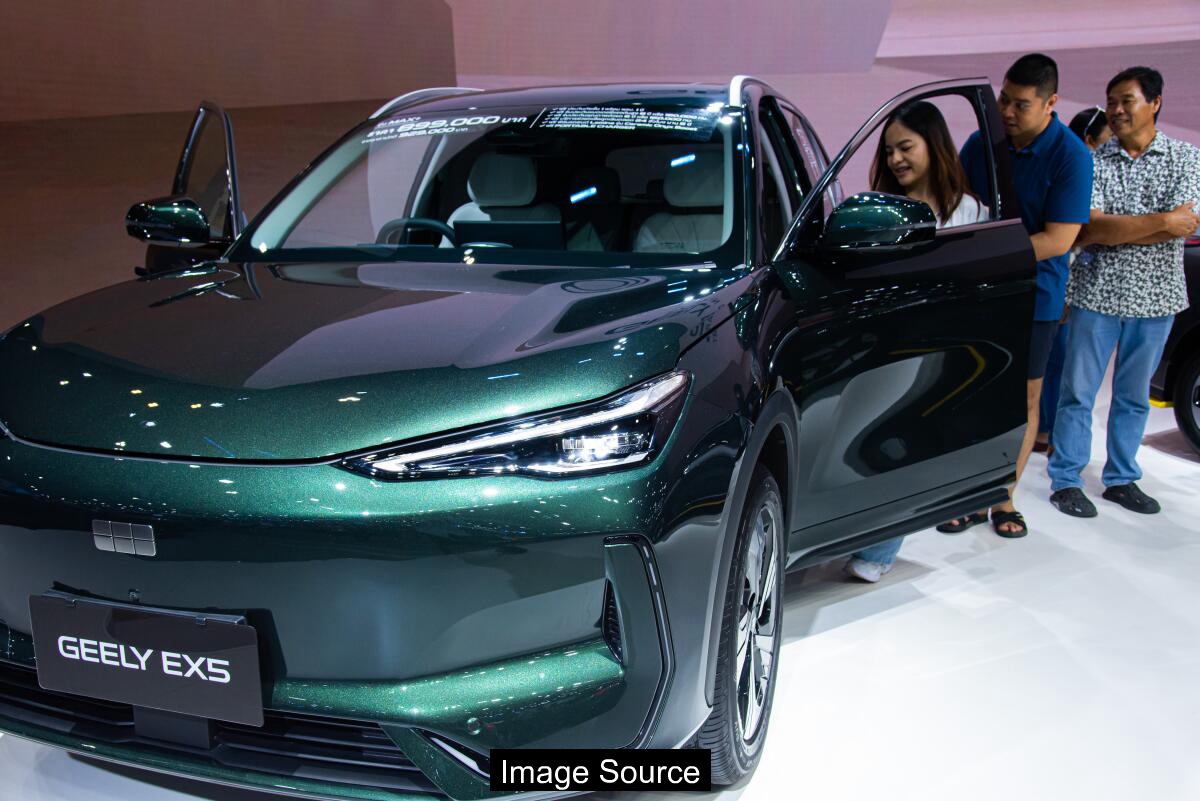
Fresh from storming the rest of the world, Chinese car companies have set their sights on breaking into the American market. And nervous U.S. automakers fear it’s just a question of when they’ll succeed. For now, 100% tariffs on Chinese electric vehicles effectively block BYD Co., Geely Automobile Holdings Ltd. and Xiomi Corp. from selling in the U.S.
However, President Trump and his counterpart, Xi Jinping, are expected to discuss lowering those barriers when they meet for their long-planned summit in May. And for all his China-bashing, Trump has already signaled he’s willing to let the country’s car companies in — under his terms. In January, he told the Detroit Economic Club he’d be happy to see Chinese automakers open factories in the U.S. and employ American workers.
Michael Dunne, a former General Motors Co. executive in Asia and an automotive consultant specializing in China, said, ‘The path for the Chinese — the one they’re looking at intensively right now — is the option to manufacture in the United States and possibly with an American partner. That is closer than most people would expect.’.
Chinese Automakers’ Presence Grows Globally
BYD alone accounts for 7 out of 10 new electric vehicle sales in Mexico, according to estimates from BloombergNEF. Canadian officials recently inked a deal with China to import 49,000 cars each year, and Geely expects Canadian government certification soon to sell its cars there.
Chrysler parent Stellantis NV is in discussions with Zhejiang Leapmotor Technology Co. to build electric vehicles together in Canada, possibly using an idled Stellantis plant in a Toronto suburb. This move highlights the growing presence of Chinese automakers in the global market.
In just the last five years, China leapfrogged every other major auto-producing nation to become the world’s largest exporter, according to consultant AlixPartners. The 7 million vehicles China shipped abroad in 2025 dwarfed Detroit’s 1.3 million exports.
Challenges and Opportunities for U.S. Automakers
For U.S. companies, the stakes could hardly be higher. China’s automakers have seized market share worldwide with cars that are stylish, loaded with advanced technology and far cheaper than Detroit can match. That’s particularly true of their electric vehicles, which charge faster and cost less than any American competition — some with prices below $10,000.
Ford Motor Co.’s chief executive officer, Jim Farley, has even discussed with the Trump administration letting Chinese and American companies form joint ventures to build cars in the U.S., so long as the domestic partner owns a majority share. However, General Motors, the largest U.S. automaker by revenue, opposes letting in its Chinese rivals, saying the move would cost U.S. companies market share and devastate their North American suppliers.
U.S. automakers already face a difficult moment. Trump’s trade war has scrambled their supply chains, which for decades have relied on Canada and Mexico. By gutting fuel-economy requirements and electric car incentives, the president has freed the companies to focus on their most profitable models — SUVs and trucks with big, gas-burning engines. But those vehicles don’t sell well outside North America, meaning U.S. automakers risk becoming niche players in the global market if they can’t master EVs.
Partnerships and Expansion Strategies
Outside the U.S., Western automakers have already partnered with the Chinese to learn from — and profit from — their technology. Stellantis spent $1.1 billion in 2023 for a 20% stake in Leapmotor, establishing a 51%-49% joint venture to produce and sell affordable electric vehicles outside China. Volkswagen AG, meanwhile, invested $700 million for a 5% stake in Chinese EV specialist Xpeng Inc. in 2023, establishing a joint venture to develop electric vehicles and software.
Geely, the Chinese company that purchased Swedish car brand Volvo Car AB from Ford in 2010, already has a foothold in the U.S. Volvo operates a South Carolina plant that also makes the Polestar line of EVs. To expand in the U.S., Geely could add production of one of its Chinese models to this underutilized factory.
In Europe, Volvo said in March it had signed a memorandum of understanding to import and distribute cars from Geely’s Lynk brand, in what could be a template for how Geely could introduce its Chinese brands to the U.S. market. However, even joint ventures would pose a risk for Detroit, by building awareness of Chinese auto brands among U.S. drivers.
※ This article summarizes publicly available reporting and is provided for general information only. It is not legal, medical, or investment advice. Please consult a qualified professional for decisions.