Los Angeles County has outlined an extensive restoration plan for its aging historic structures, projecting significant infrastructure investment to preserve architectural heritage. The proposed $700 million budget for building repairs has drawn skepticism from independent architectural and preservation experts, who argue that the actual costs could diverge substantially from the county’s initial assessment.

The Controversial County Building Decision
Los Angeles County’s recent $200 million purchase of the Gas Company Tower has sparked significant debate about the future of the Kenneth Hahn Hall of Administration. County officials justified the move by claiming that retrofitting their existing 1960s headquarters would cost an astronomical $700 million. However, a group of experts and preservationists now challenge this assessment, suggesting the renovation could be accomplished for substantially less.
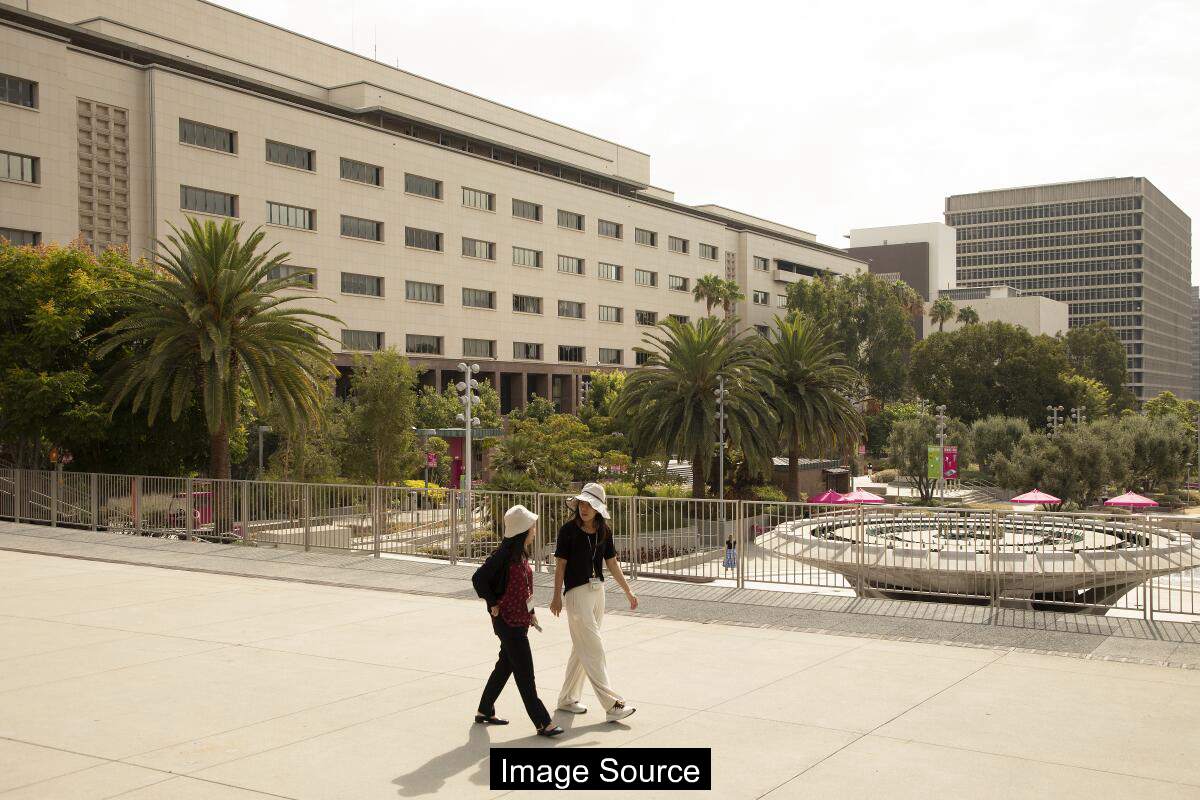
The historic building, spanning a full city block and facing a landscaped park, has been a central part of Los Angeles’ Civic Center since 1960. Its architectural significance is underscored by its co-design by renowned midcentury architect Paul R. Williams. Despite its institutional aesthetic, the structure remains fundamentally functional and potentially salvageable.
Critics argue that the county may have deliberately inflated retrofit costs to justify moving to more luxurious downtown offices. Developer and preservationist Dan Rosenfeld leads a group actively lobbying to reconsider the building’s demolition, claiming the actual renovation could cost less than $150 million using standard techniques.

Retrofit Costs: Fact vs Fiction
Structural engineers and preservation experts have conducted detailed examinations of the Kenneth Hahn Hall of Administration, challenging the county’s high-cost retrofit estimates. Their analysis suggests that using standard seismic upgrading techniques could dramatically reduce renovation expenses compared to the county’s projections.
The original $700 million estimate relied on an expensive base isolation technique, which involves lifting the entire building and installing flexible seismic energy absorbers. This method is typically reserved for critical infrastructure like hospitals and city halls, making it an unnecessarily costly approach for this particular building.
By comparison, other historic Los Angeles buildings like the Hall of Justice have undergone more cost-effective seismic retrofitting. Architect Karin Liljegren’s firm specializes in adaptive reuse of older structures and argues that demolition would not only erase architectural history but also create significant construction waste.
FAQ: Building Preservation Insights
Q1. Why is the Kenneth Hahn Hall of Administration considered historically significant?
A1. The building was designed in the Late Moderne architectural style and co-created by Paul R. Williams, a prominent midcentury architect. It has been a key part of Los Angeles’ Civic Center since 1960 and represents an important period in the city’s architectural development.
Q2. What are the potential alternatives to demolition?
A2. Experts suggest comprehensive seismic retrofitting, potential adaptive reuse for offices or housing, and maintaining the building as a historical landmark. Supervisor Janice Hahn has proposed keeping the Gas Company Tower as a potential rental property while renovating the existing hall.
Political and Economic Perspectives
Supervisor Janice Hahn, the only board member who voted against purchasing the Gas Company Tower, continues to advocate for preserving the Hall of Administration. Her stance goes beyond family legacy, emphasizing potential cost savings and environmental considerations of renovation over demolition.
County officials maintain that their decision was based on a comprehensive evaluation of seismic options. Acting Chief Executive Joseph Nicchitta defended the process, stating that the retrofit estimate resulted from a competitively procured assessment and involved professional engineering expertise.
The debate highlights broader questions about urban development, historical preservation, and responsible use of public resources. Proponents of saving the building argue that unnecessary demolition represents both financial waste and cultural erasure.
Strategic Pointers
The ongoing controversy surrounding the Kenneth Hahn Hall of Administration reveals complex dynamics in municipal building management. The dispute underscores the importance of transparent cost assessments and comprehensive evaluation of preservation alternatives.
Potential strategies moving forward include conducting independent third-party assessments of retrofit costs, exploring adaptive reuse options, and developing more nuanced approaches to managing aging public infrastructure.
The case serves as a critical reminder that initial estimates should be rigorously scrutinized, especially when significant public funds are involved. Collaborative approaches between preservation experts, engineers, and government officials can yield more innovative and cost-effective solutions.
※ This article summarizes publicly available reporting and is provided for general information only. It is not legal, medical, or investment advice. Please consult a qualified professional for decisions.